Mara Beck · 3 November 2026
Local Growers Forge Unexpected Partnerships with Event Organizers to Tackle Water Shortages
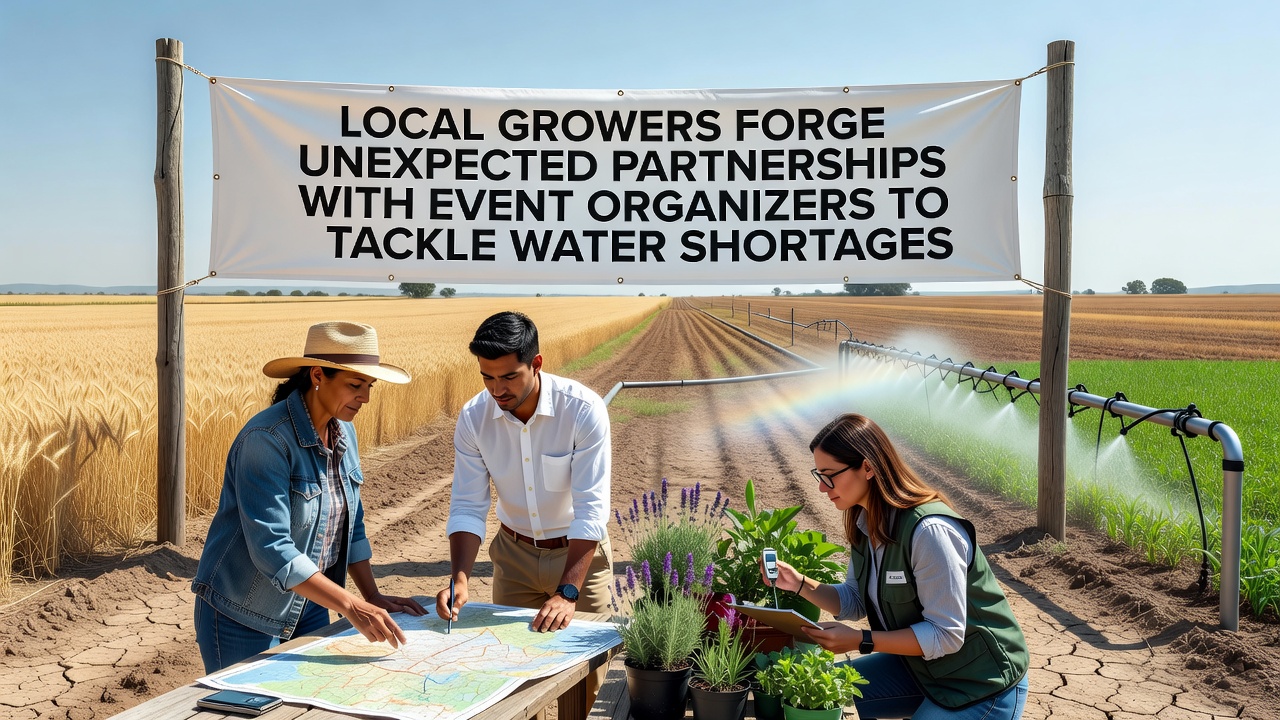
Local agricultural producers across drought-prone regions have started forming direct collaborations with festival planners and large-scale event coordinators, creating shared systems for water capture, treatment, and redistribution that address both crop irrigation needs and event operational demands. These arrangements emerged after multiple dry seasons reduced reservoir levels and forced both sectors to seek practical solutions beyond traditional municipal supplies.
Origins of the Collaborations
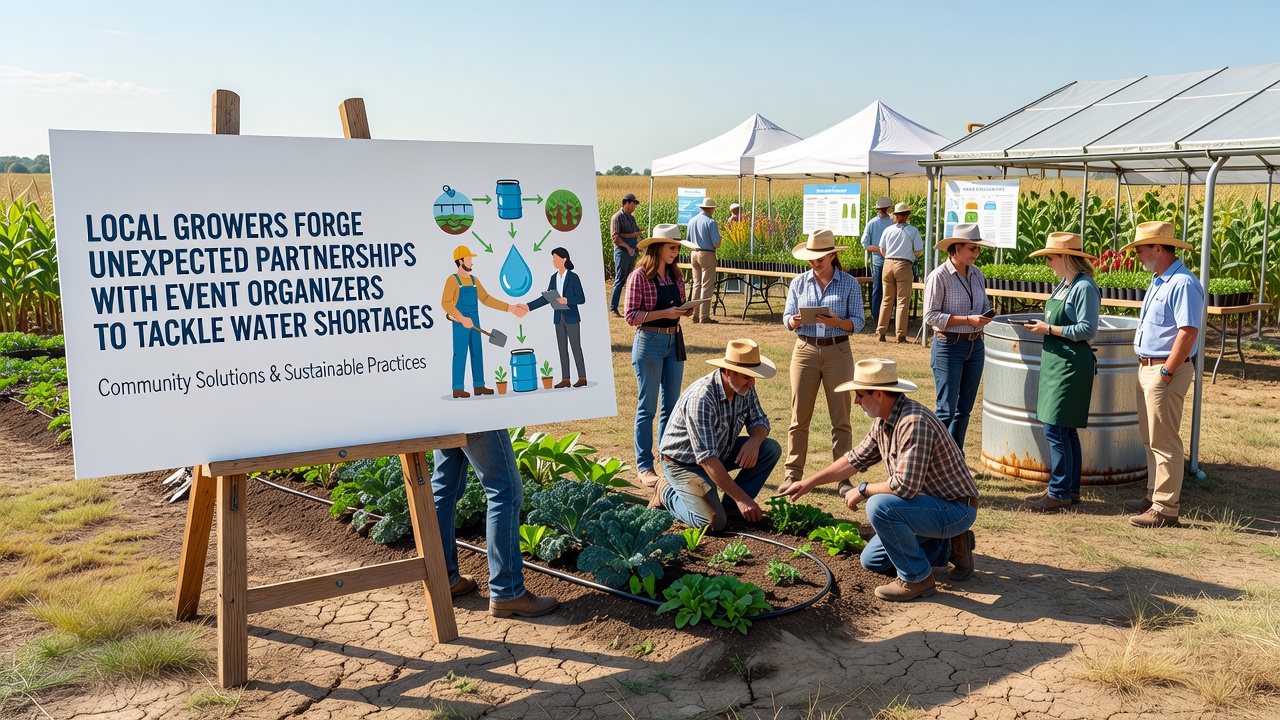
Water allocation records from regional authorities show that agricultural withdrawals and event-related consumption often peak during the same summer and fall months, creating competition that strains existing infrastructure. In response, growers in several districts began approaching organizers of annual fairs, music festivals, and heritage celebrations with proposals to install joint filtration units and temporary storage tanks at event sites. The treated water then flows directly to nearby fields for irrigation, while event venues gain access to on-site reserves that reduce their reliance on municipal lines during peak attendance periods.
Researchers tracking these projects note that the partnerships typically begin with pilot agreements covering a single event season, after which both parties evaluate volume data and quality metrics before extending terms. One documented case involved a county fairground that routed greywater from food vendors through a mobile treatment trailer supplied by neighboring orchards, yielding enough reclaimed water to irrigate 12 acres of fruit trees over a three-week period.
Technical Arrangements and Resource Sharing
Equipment configurations vary by location but commonly include modular reverse-osmosis units, UV disinfection skids, and lined retention ponds sized to match expected attendance. Event organizers provide the venue footprint and temporary power connections, while growers supply pumps, piping networks, and agronomic expertise to ensure the reclaimed water meets crop-specific salinity thresholds. Contracts usually stipulate joint monitoring schedules, with third-party labs testing samples at regular intervals throughout each event cycle.
Observers tracking implementation costs report that shared capital expenses drop significantly when both parties contribute components rather than duplicating infrastructure. Data compiled through November 2026 indicates average per-event water recovery rates between 65 and 78 percent once systems reach steady operation, with the balance lost to evaporation or retained for on-site landscaping. These figures come from aggregated reports issued by participating districts and align with broader patterns documented in arid-zone agricultural studies.
Geographic Spread and Policy Context
Similar arrangements now appear in multiple states and provinces where water rights frameworks permit inter-sector transfers under temporary permits. Agricultural extension services in the western United States and comparable agencies in Australia have published guidance documents outlining permitting pathways and liability considerations for such cross-sector projects. One Australian government resource on water recycling highlights successful trials at regional agricultural shows where runoff from livestock areas was processed for pasture irrigation the following season.
Local governments have begun incorporating language into event permitting checklists that encourages applicants to identify nearby agricultural users interested in reclaimed volumes. This administrative shift reduces the administrative burden on individual growers and event companies seeking approvals for shared systems.
Measured Outcomes and Ongoing Monitoring
Yield data collected from fields receiving event-derived irrigation show no statistically significant deviation from control plots irrigated with conventional sources when salinity and nutrient levels remain within established thresholds. Soil moisture sensors installed at partnership sites transmit real-time readings that allow both growers and organizers to adjust pumping schedules and avoid over-application. These sensor networks also feed into regional drought monitoring dashboards maintained by university research stations.
Industry associations representing outdoor event producers have started including case studies of these water-sharing models in their annual sustainability reports, citing measurable reductions in trucked-in water deliveries. Parallel reports from grower cooperatives document corresponding decreases in groundwater pumping during the same periods.
Conclusion
The pattern of growers and event organizers coordinating water infrastructure continues to expand as more regions compile performance data from completed seasons. Regulatory updates adn technical refinements emerging from these projects provide templates that other districts can adapt, while ongoing sensor and laboratory monitoring ensures that water quality standards remain consistent across agricultural and event applications.